Starship flight 5: the first booster catch by the tower
Updated on November 26, 2026.
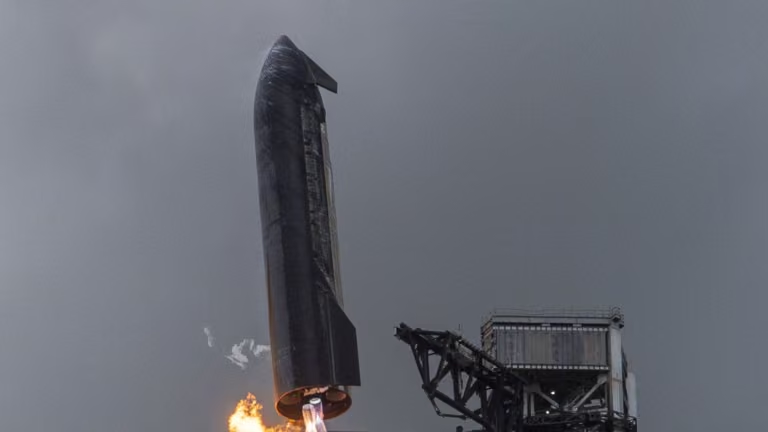
Starship flight 5 lifted off from Starbase, Texas, on Sunday, October 13, 2024, at 7:25 a.m. local time (8:25 a.m. Eastern). It was the flight in which the Super Heavy booster flew back to the pad and was caught by the arms of the launch tower, on the first try. The ship splashed down in the Indian Ocean 1 hour, 5 minutes and 40 seconds after liftoff. Both stages succeeded. Nothing like it had been done before.
Flight 5 at a glance
| Item | Detail |
|---|---|
| Date and time | October 13, 2024, 12:25 UTC (7:25 a.m. CDT at Starbase) |
| Site | Starbase, Texas, orbital launch pad OLP-1 |
| Booster | Super Heavy Booster 12 (B12), Block 1 |
| Ship | Starship Ship 30 (S30), Block 1 |
| Payload | None |
| Ship trajectory | Suborbital, with an apogee of about 132 miles (212 km) |
| Duration | 1 hour, 5 minutes and 40 seconds |
| Result | Success: booster caught by the tower; ship splashed down under control |
What the flight was meant to test
SpaceX described it as the flight with the most ambitious objectives so far. The central goal was the catch. Instead of landing in the sea, as on flight 4, the booster was to return to the pad. There, it would be held by the “chopsticks,” the two tower arms the company calls Mechazilla.
The ship had a familiar test: repeat the hot staging, finish the ascent and cross reentry to a point in the Indian Ocean. According to Elon Musk, in June, the heat-shield tiles were twice as strong and gained a new layer of protection underneath.
Why the flight took so long
The FAA, the agency that licenses launches in the United States, said on June 12 that flight 4 did not require an investigation. In early August, SpaceX declared both stages ready. But the license did not come.
According to Wikipedia, the agency explained that the catch plan changed where the separation ring would fall. It also created a sonic boom. That called for an environmental review and consultation with wildlife agencies. SpaceX criticized the process in public and said, in September, that the FAA had moved the date to November. The license came on October 12. That was one day before launch, and the FAA did not explain the change.
What happened, in order
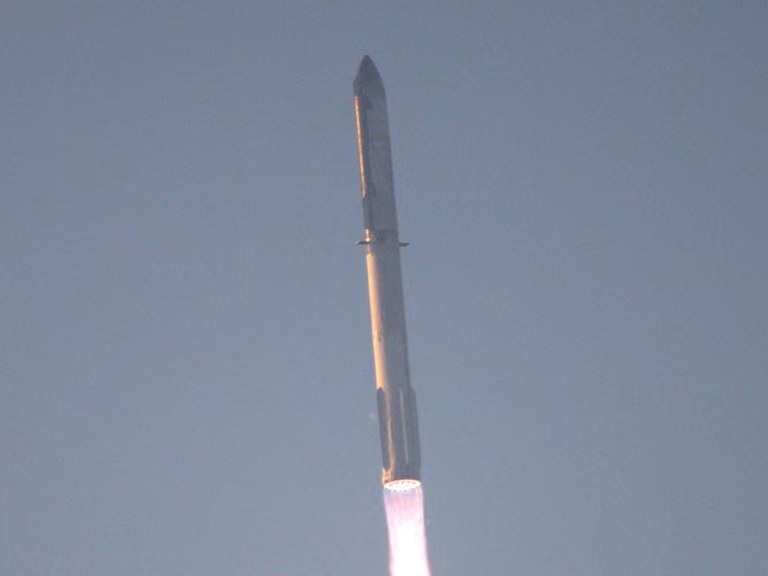
- Ascent: the booster carried the ship to about 69 km (43 miles) in altitude and did hot staging. The ship lit its six Raptor engines and continued toward space.
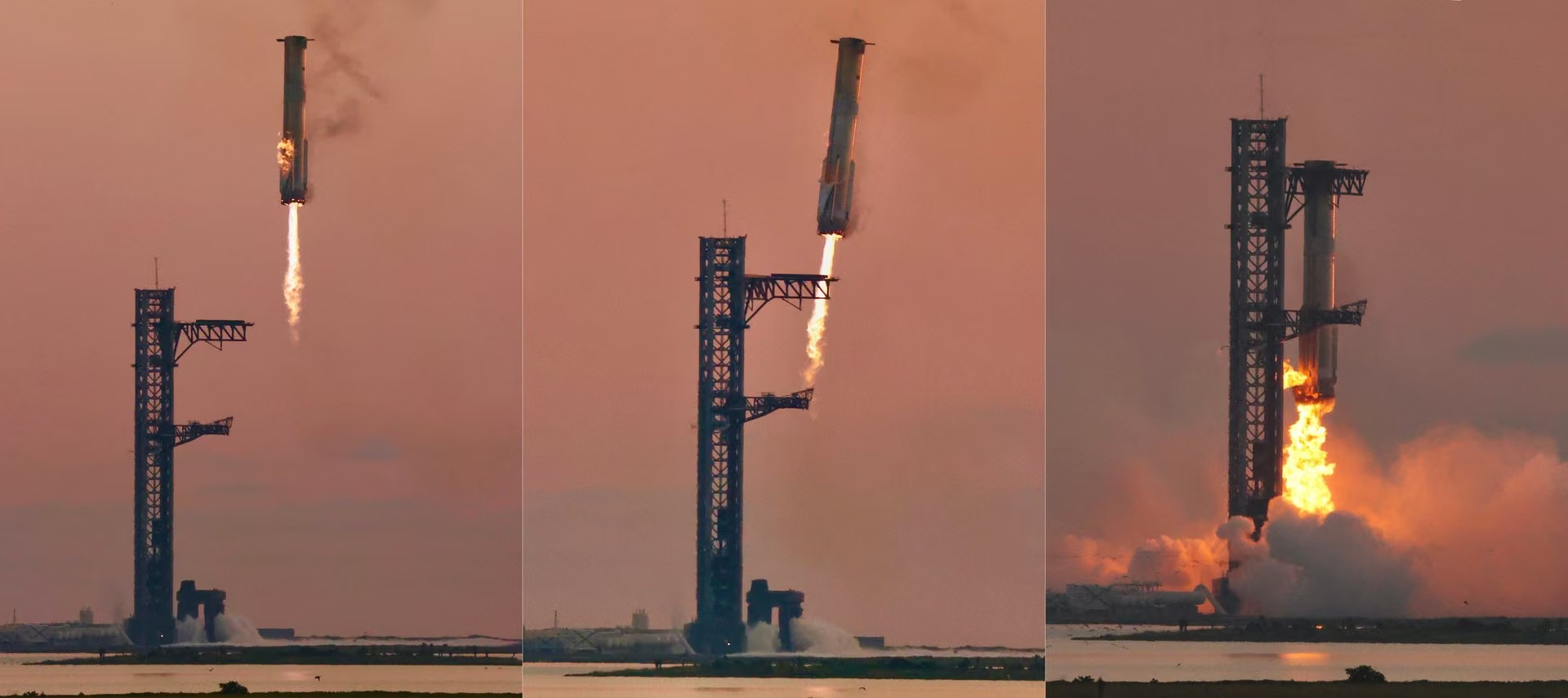
- Booster return: Super Heavy flipped, relit its engines and flew back to the pad, while the tower reactivated the water system that protects the ground from the heat and noise of the arrival.
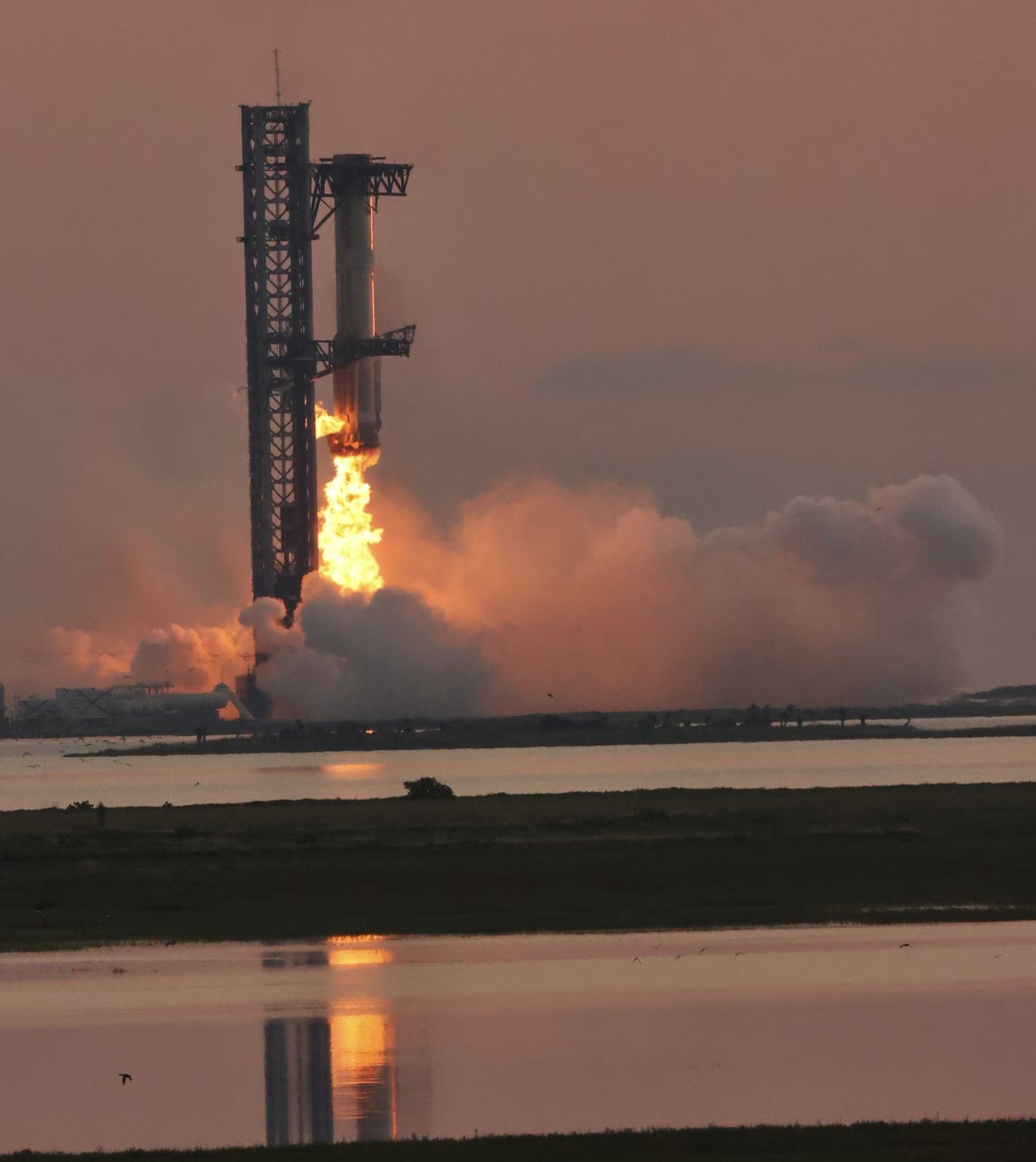
- Catch: the booster slowed to a near hover and slid sideways to line up with the arms. The arms closed around the booster, and only then did the engines shut down.
- Ship: it crossed to the far side of the planet and made reentry through peak heating and maximum pressure. It showed minor damage to the flaps but kept control.
- Splashdown: the ship flipped, fired for landing and splashed down near a buoy placed in advance, which filmed the splashdown. The ship was not going to be recovered. About 16 seconds later, it turned into a fireball.
SpaceX said thousands of vehicle and pad criteria, each with its own check, had to be met before the catch attempt, and all were. The catch came on the first try.
Objective by objective
| Objective | Result |
|---|---|
| Booster catch by the tower | Done, on the first attempt |
| Hot staging | Done |
| Ship reentry under control | Done, with minor flap damage |
| Ship flip and landing burn | Done |
| Splashdown near the target point | Done, next to a buoy |
| Recover the ship | Not an objective |
How the world reacted
NASA Administrator Bill Nelson congratulated SpaceX on the catch and on the fifth flight. Retired Canadian astronaut Chris Hadfield said there was “an enormous step forward in human capability.” Other companies in the field, such as Blue Origin, also praised it. The president of a European disruptive-technology initiative, on the other hand, called it “a huge slap in the face” to Europeans, according to Wikipedia.
What changed for flight 6
With the catch done, the next step was to repeat it and widen the ship’s tests. Flight 6 took place on November 19, 2024, with Booster 13 and Ship 31. According to Wikipedia’s table, the catch was aborted that time, and the ship splashed down under control.
Quick glossary
- Catch: the booster comes back and the tower arms hold it in the air, with no landing legs.
- Mechazilla: the name SpaceX gives the launch and catch tower, with its two arms.
- Hot staging: the ship lights its engines while still attached to the booster.
- Sonic boom: the crack of an object passing the speed of sound.
- Splashdown: landing in the sea.
Common mix-ups
- “The tower caught the whole rocket”: it caught only the booster, the first stage. The ship did not return to the tower on this flight.
- “The booster landed”: it never touched the ground. It was held by the arms.
- “The ship was recovered”: no. It splashed down in the Indian Ocean and was destroyed afterward, as planned.
- “It was an orbital flight”: the trajectory was still suborbital, with an apogee of 212 km.
The rule to remember
On this flight, SpaceX showed that a booster that size can come back and be caught in the air. That is the heart of the idea of reusing the first stage quickly. No legs, no delay.
Quick questions
When was Starship flight 5?
On October 13, 2024, at 7:25 a.m. local time at Starbase.
What was caught?
The Super Heavy Booster 12, by the arms of the Starbase tower.
Was the ship recovered?
No. It splashed down in the Indian Ocean and was not going to be recovered.
When was flight 6?
On November 19, 2024.
Previous flight: Starship flight 4
Sources: Starship’s Fifth Flight Test, SpaceX, October 13, 2024; Starship flight test 5, English Wikipedia; List of Starship launches, English Wikipedia. Accessed November 26, 2026. Eastern time calculated from UTC.
Featured image: Bech, BugWarp, Huntster, Prospectprospekt, Steve Jurvetson, CC BY 2.0, via Wikimedia Commons. Text image: Steve Jurvetson, CC BY 2.0, via Wikimedia Commons.