Starship flight 6: aborted catch and a relight in space
Updated on November 26, 2026.
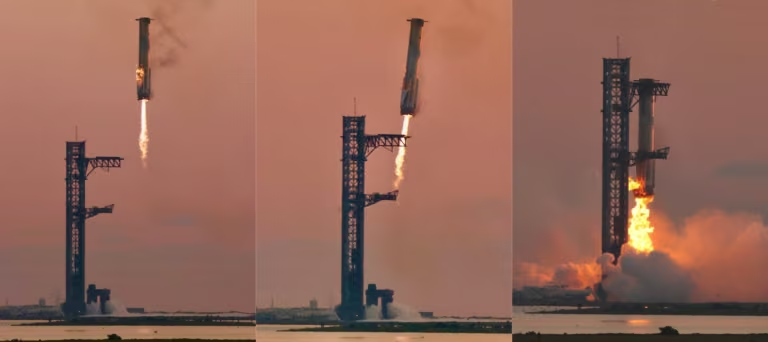
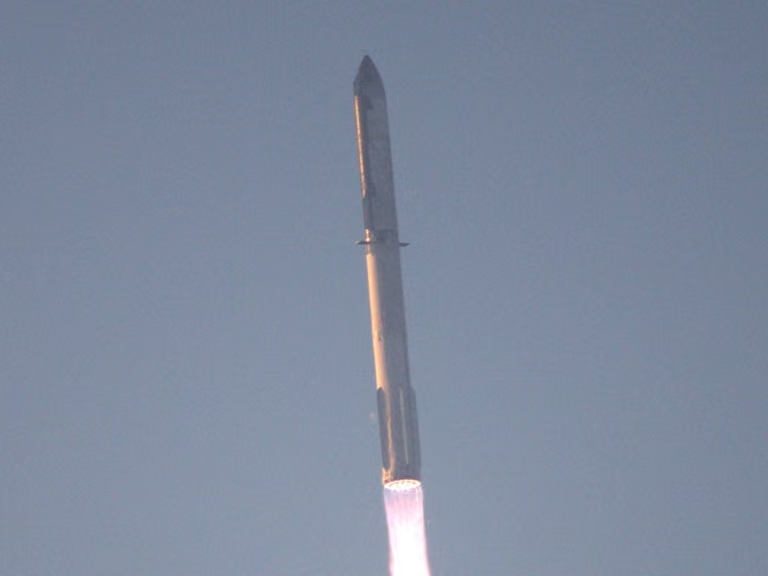
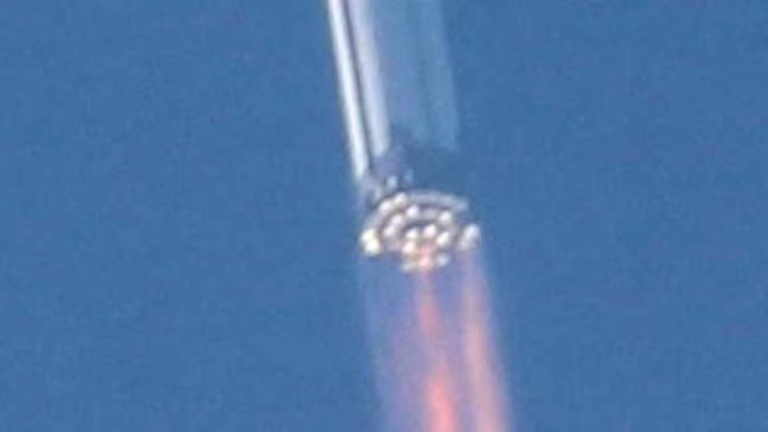
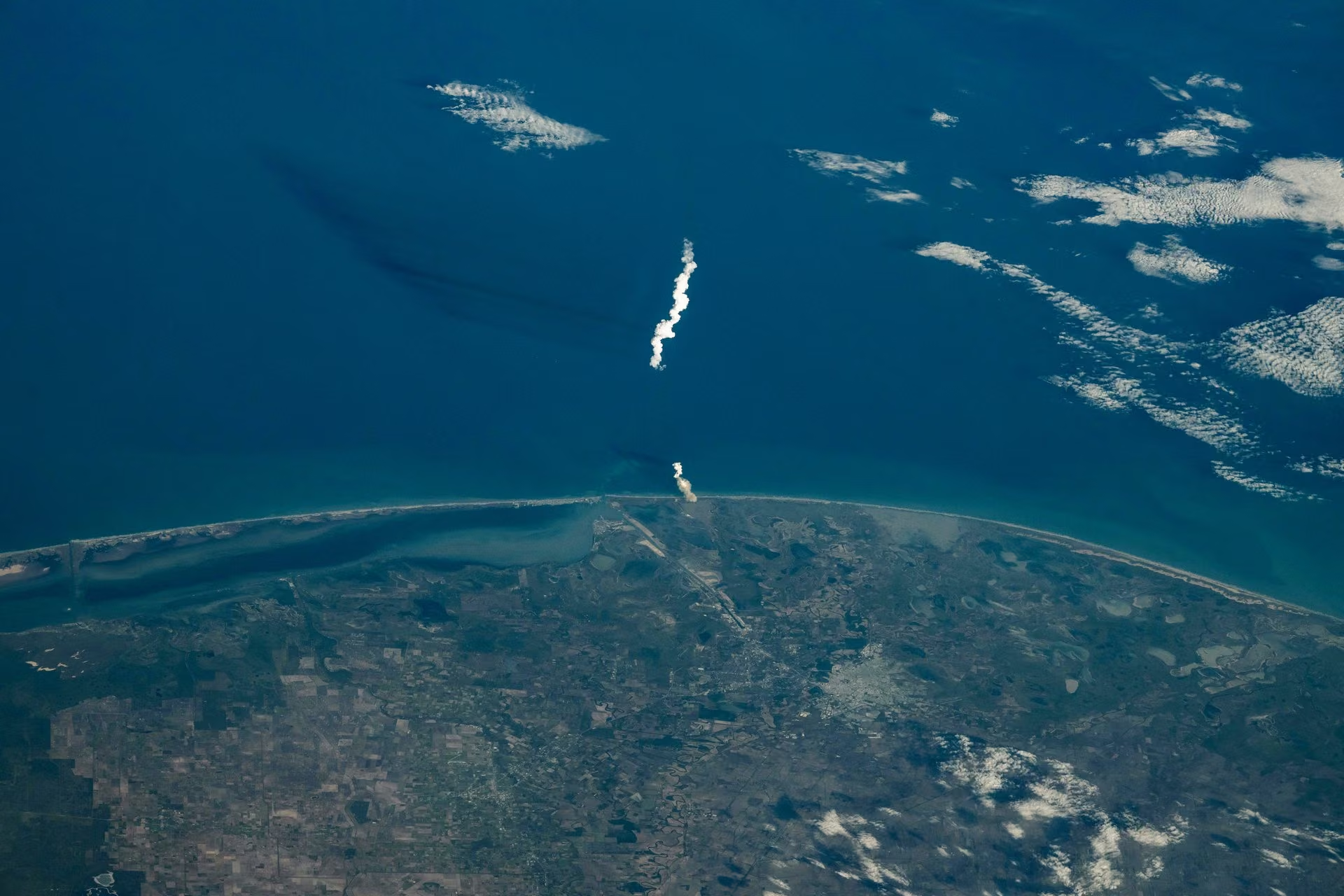
Starship flight 6 lifted off from Starbase, Texas, on Tuesday, November 19, 2024, at 4:00 p.m. local time (5:00 p.m. Eastern). The Super Heavy booster was not caught: the tower aborted the attempt, and it landed in the Gulf of Mexico. The ship, for its part, relit a Raptor engine in space for the first time. It splashed down in the Indian Ocean 1 hour, 5 minutes and 24 seconds after liftoff. It was a learning flight.
Flight 6 at a glance
| Item | Detail |
|---|---|
| Date and time | November 19, 2024, 22:00 UTC (4:00 p.m. CST at Starbase) |
| Site | Starbase, Texas, orbital launch pad OLP-1 |
| Booster | Super Heavy Booster 13 (B13), Block 1 |
| Ship | Starship Ship 31 (S31), Block 1, the last of that version |
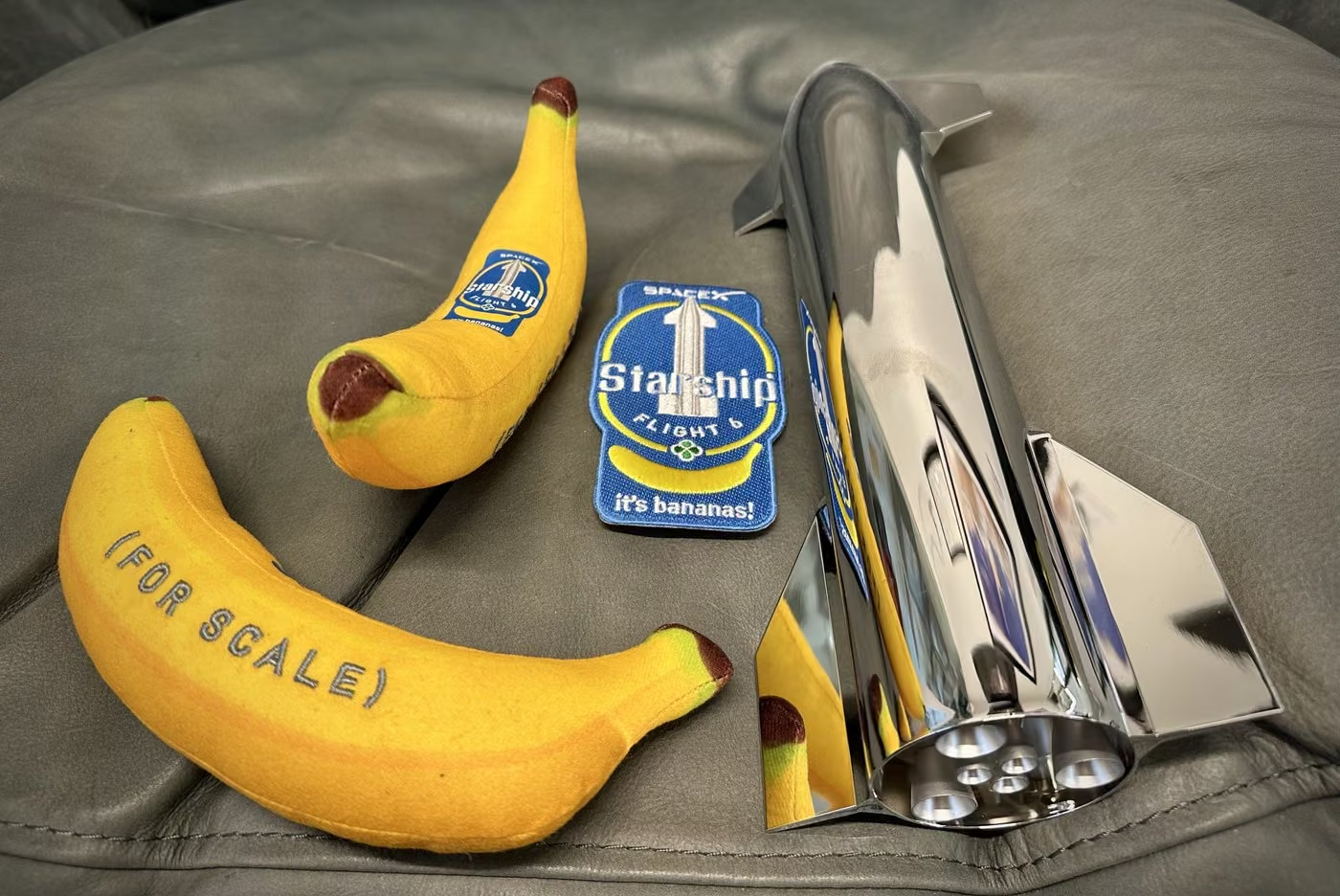
| Payload | A stuffed banana, as a zero-gravity indicator |
| Ship trajectory | Suborbital; initial apogee of 190 km, then 228 km |
| Duration | 1 hour, 5 minutes and 24 seconds (22:00:00 to 23:05:24 UTC) |
| Result | Partial success: catch aborted; ship splashed down under control |
What the flight was meant to test
The profile repeated that of flight 5: a suborbital flight to the Indian Ocean, with a new attempt to catch the booster. SpaceX added tests for the future recovery of the ship. Reentry would be at a steeper angle, to push the limits of the flaps, and some parts got new thermal protection materials.
Part of the shield was removed on purpose, at the points where the catch hardware will go on future ships, the ones the tower will grab by the arms. And there was a first-ever test: relighting a single Raptor in the vacuum, the maneuver the ship will need to leave orbit and return to Earth.
The liftoff was set for later than on earlier flights. That way the ship would come down to the ocean in daylight. According to Wikipedia, that improved the visual observations of the splashdown.
What happened, in order
- Ascent: the booster’s 33 engines lit at the start of the launch window. The ascent was normal. Hot staging came at 2 min 39 s, and the ship continued toward space.
- Booster return: Super Heavy did its boostback burn. Then automated health checks of the tower hardware flagged a problem, and the catch attempt was aborted.
- Gulf landing: the booster performed a pre-planned divert maneuver, fired for landing and touched the water softly, about 32 km (20 miles) from the launch point. It then broke up. The liquid oxygen tank section kept floating and was sunk only the next day.
- Ship, in space: initial apogee of 190 km, perigee of 8 km and an orbit tilted 26.3 degrees. It was the first time the ship had a positive perigee. That means the lowest point of the trajectory stayed above the Earth’s surface, at 8 km.
- Relight: at 22:37:46 UTC, the ship relit a Raptor in vacuum. It was a first. The apogee rose to 228 km and the perigee to 50 km.
- Reentry and splashdown: reentry began at 22:47:13 UTC. The ship went through maximum heating, flipped, fired for landing and splashed down at 23:05:24 UTC. It was the first landing from space in daylight.
Why the catch was aborted
SpaceX said automated checks of critical tower hardware triggered the abort. According to Wikipedia, the cause was a loss of communication with the tower. It was later found that a communications antenna and a weather station had been bent by the engine plume at launch.
If the checks fail, the catch does not go ahead. The plan changes. The pre-planned divert to the water takes over, which SpaceX had already prepared.
Objective by objective
| Objective | Result |
|---|---|
| Booster catch by the tower | Aborted by the tower’s checks |
| Booster landing in the Gulf, if aborted | Done, soft |
| Relight a Raptor in space | Done, for the first time |
| Reentry at a steeper angle | Done |
| Thermal protection experiments | Done, with data collected |
| Splashdown under control | Done, in daylight |
What the banana was doing there
The flight’s payload was a stuffed banana. It served as a zero-gravity indicator and stayed inside the ship the whole time. It was the first payload Starship carried, and the flight’s emblem carried the phrase “it’s bananas,” a joke from the team.
What changed for flight 7
Flight 6 was the last to use the Block 1 ship. The Block 2 version debuted on flight 7, on January 16, 2025, with Booster 14 and Ship 33. According to Wikipedia’s table, the booster was caught on that flight, and the flight was classed as a failure. See Starship flight 7.
Quick glossary
- Perigee: the lowest point of the ship’s path around the Earth.
- Apogee: the highest point of the path.
- Relight: lighting an engine that has already been used on the same flight.
- Pre-planned divert: a maneuver prepared for the case where the catch cannot be done.
- Block 1: the first version of Starship, used through flight 6.
Common mix-ups
- “Flight 6 failed”: no. The catch was aborted, but the other objectives were met.
- “The ship reached orbit”: not yet. The positive perigee showed it was close, but the trajectory was still suborbital.
- “The booster was recovered”: no. It touched the water and broke up.
- “The banana was the real payload”: it was only a zero-gravity indicator.
The rule to remember
Safety comes first. Aborting a catch is not a failure when that is the reason. Here, the tower aborted the catch on detecting a problem, and the ship used the flight to prove the relight in space.
Quick questions
When was Starship flight 6?
On November 19, 2024, at 4:00 p.m. local time at Starbase.
Was the booster caught?
No. The attempt was aborted, and it landed softly in the Gulf of Mexico.
What was new on the ship?
The relight of a Raptor in space, which it will need to leave orbit.
When was flight 7?
On January 16, 2025.
Previous flight: Starship flight 5
Sources: Starship’s Sixth Flight Test, SpaceX, November 19, 2024; Starship flight test 6, English Wikipedia; List of Starship launches, English Wikipedia. Accessed November 26, 2026. Eastern time calculated from UTC.
Featured image: NASA/Don Pettit, public domain, via Wikimedia Commons. Text image: Steve Jurvetson, CC BY 2.0, via Wikimedia Commons.