NASA’s Artemis Program: Why America Is Going Back to the Moon
Updated November 2, 2026.
Artemis is NASA’s program to return astronauts to the Moon, and the program is now flying crews again. In April 2026, the Artemis II mission carried four people around the Moon and broke the record for the farthest humans have traveled from Earth. The next flight, Artemis III, changed roles. The first crewed landing of the program moved to Artemis IV, which NASA is targeting for early 2028.
Artemis I: the test flight
Artemis I launched on November 16, 2022. It splashed down on December 11. The Orion capsule flew with no one on board, and the mission worked. Still, the heat shield wore away more than expected during reentry into the atmosphere.
Artemis II: four astronauts around the Moon
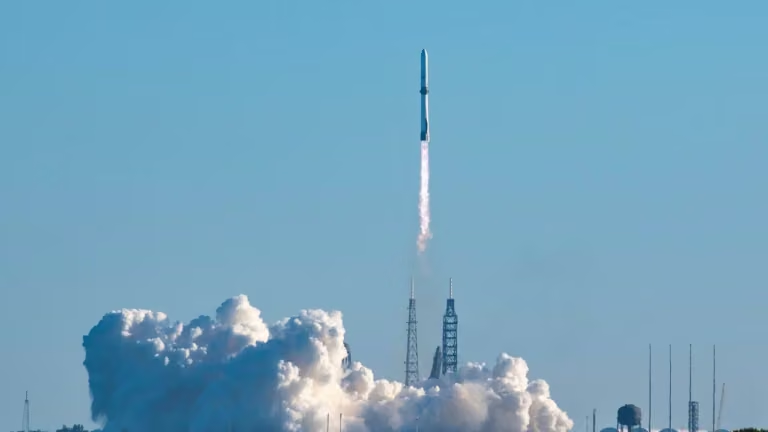
Artemis II lifted off on April 1, 2026, at 6:35 p.m. Eastern time (22:35 UTC), from Launch Complex 39B at Kennedy Space Center in Florida. It was the first crewed flight of the program. Reid Wiseman commanded the flight, and Victor Glover was the pilot. Christina Koch and Jeremy Hansen served as mission specialists. The crew named the capsule Integrity.
The mission lasted 9 days, 1 hour and 32 minutes, and the mission was a success. Orion splashed down in the Pacific Ocean, southwest of San Diego, on April 10 at 8:07 p.m. Eastern time (April 11, 00:07 UTC). The U.S. Navy recovered the crew from the water after splashdown.
At the farthest point, the crew reached 252,756 miles (406,771 km) from Earth. That is the greatest distance humans have ever traveled, and it beat the record set by Apollo 13. No one had gone farther.
What comes next
Artemis III, planned for late 2027, is no longer the landing mission, although it held that role before February 2026. It is now a test in low Earth orbit, where the crew will practice rendezvous and docking with commercial lunar landers.
Artemis IV, targeted for early 2028, is meant to put astronauts on the surface. The lander has not been decided yet, and it will be either SpaceX’s Starship or Blue Origin’s Blue Moon. Artemis V, in late 2028, would be a second landing and the start of NASA’s effort to build a permanent Moon base.
The rocket, the capsule and the changes
The rocket is NASA’s Space Launch System, or SLS. The Orion crew module is built by Lockheed Martin, and the European Service Module is built by Airbus. In February 2026, NASA canceled the Block 1B and Block 2 versions of the SLS and made Block 1 the standard. Starting with Artemis IV, the Centaur V upper stage replaces the earlier one.
The Wikipedia page for the program puts the cost of the SLS at $31.6 billion as of 2025. It also describes the Lunar Gateway space station as canceled. As of October 28, 2026, 78 countries had signed the Artemis Accords, a set of principles for the peaceful exploration of the Moon.
| Mission | Date | What it is |
|---|---|---|
| Artemis I | November 16 to December 11, 2022 | Uncrewed test of Orion |
| Artemis II | April 1 to 10, 2026 | Crewed flight around the Moon |
| Artemis III | Late 2027 (planned) | Low Earth orbit test with lunar landers |
| Artemis IV | Early 2028 (target) | First crewed landing of the program |
| Artemis V | Late 2028 (planned) | Second landing and Moon base |
Frequently asked questions
What is the Artemis program?
It is NASA’s program to return astronauts to the Moon and then build a lasting presence there. It brings together NASA’s own rocket and capsule with landers built by private companies.
Has Artemis II happened yet?
Yes. It launched on April 1, 2026. It splashed down on April 10, Eastern time. Four astronauts flew: Reid Wiseman, Victor Glover, Christina Koch and Jeremy Hansen.
When will Americans walk on the Moon again?
NASA’s target is early 2028, on the Artemis IV mission. The date could slip. It has slipped before.
Will Artemis III land on the Moon?
No. It became a test in low Earth orbit, planned for late 2027.
Who builds the lunar landers?
SpaceX, with its Starship, and Blue Origin, with its Blue Moon, are the two companies developing lunar landers for NASA.
Read next: The International Space Station: How It Works and When It Ends and The James Webb Space Telescope: What It Is and How It Works.
Sources: Artemis program, Wikipedia; Artemis II, Wikipedia; Artemis II crew completes historic lunar flyby with successful Pacific splashdown, New Space Economy.
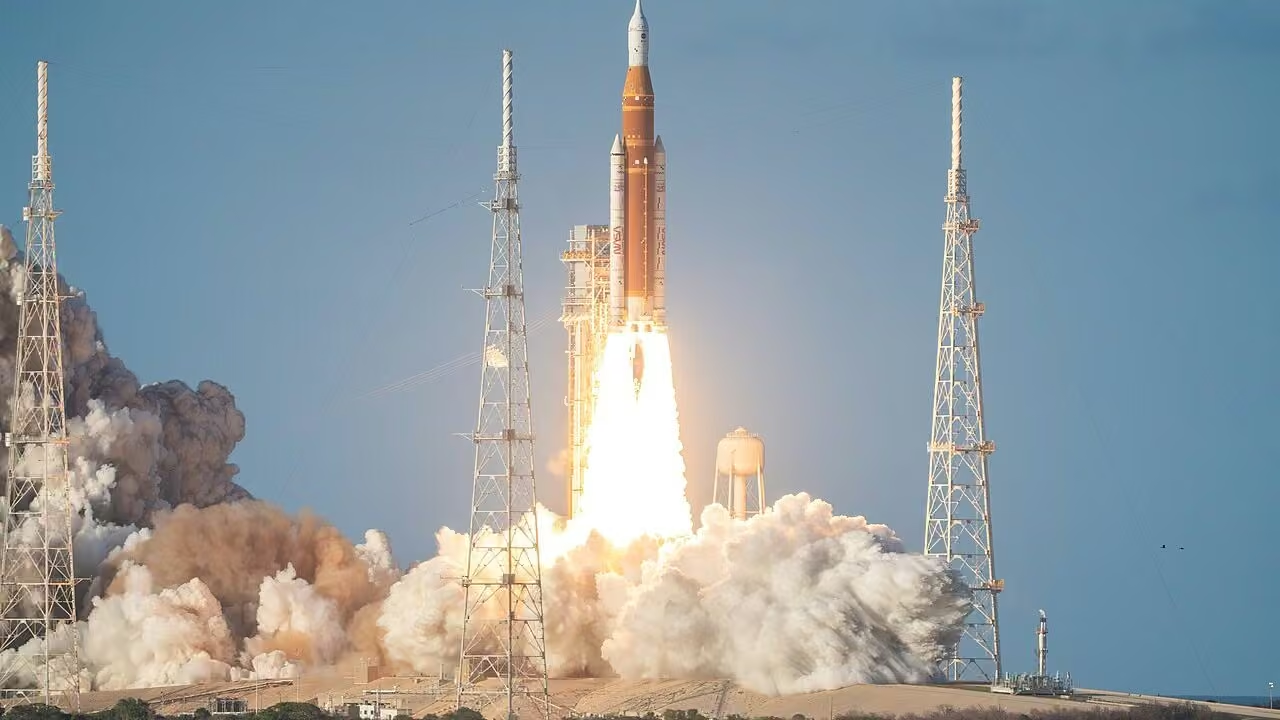
Featured image: NASA Kennedy Space Center / NASA/Brandon Hancock, Public domain, via Wikimedia Commons.