Starship flight 1: the first integrated test
Updated on November 26, 2026.
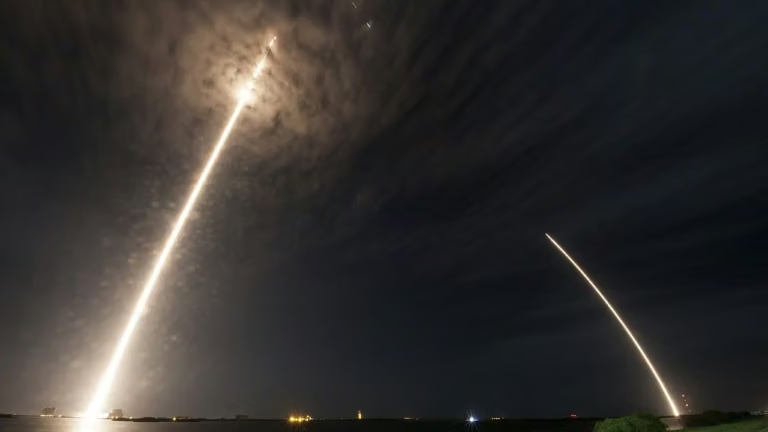
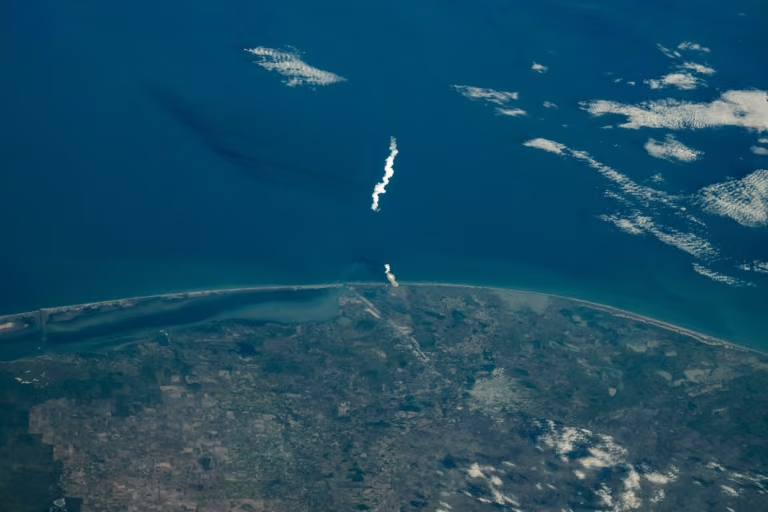
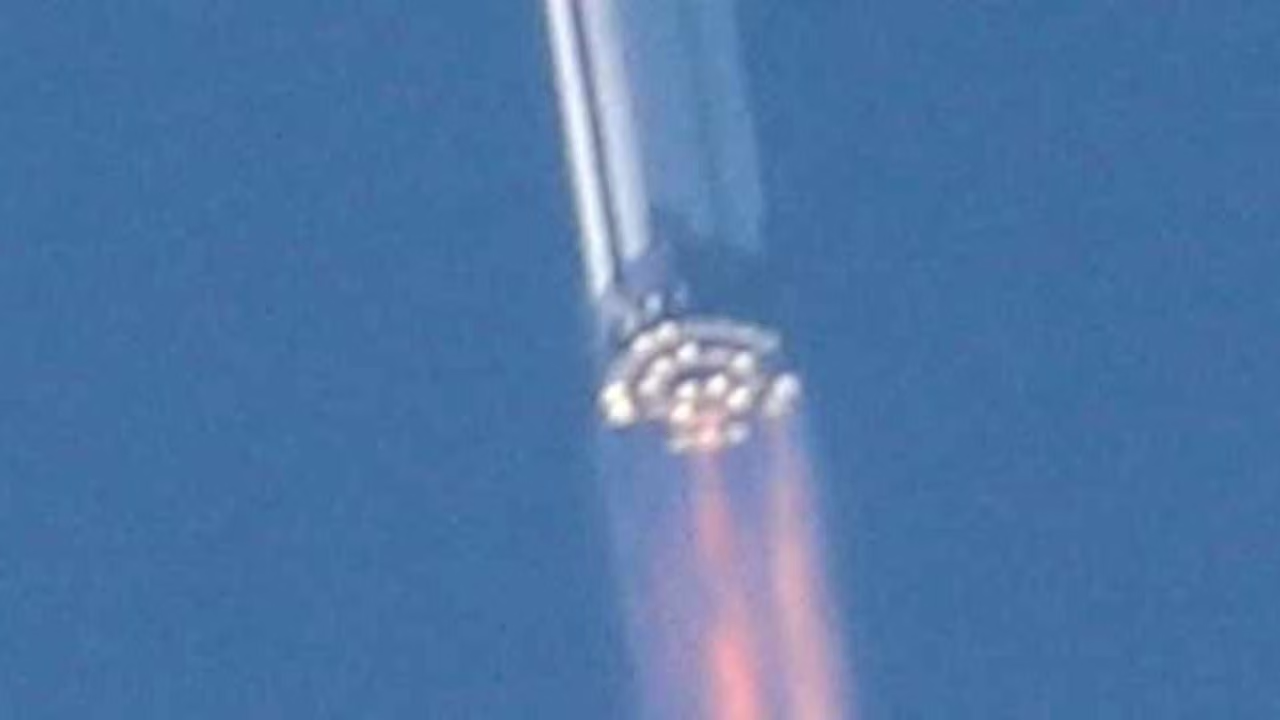
Starship flight 1 lifted off from Starbase, Texas, on Thursday, April 20, 2023, at 8:33 a.m. local time (9:33 a.m. Eastern). It was the first time the Super Heavy booster and the Starship ship flew stacked together as a single rocket. Liftoff worked. But several engines failed, the stack lost control, and SpaceX destroyed it in midair about four minutes after it left the ground. The ship never reached space.
Flight 1 at a glance
| Item | Detail |
|---|---|
| Date and time | April 20, 2023, 13:33:09 UTC (8:33 a.m. CDT at Starbase) |
| Site | Starbase, Texas, orbital launch pad OLP-1 |
| Booster | Super Heavy Booster 7 (B7), Block 1 |
| Ship | Starship Ship 24 (S24), Block 1 |
| Payload | None |
| Peak altitude | About 39 km (24 mi), over the Gulf of Mexico |
| Duration | About 4 minutes (the plan was about 90) |
| Result | Failure: destroyed by the flight termination system |
What the test was meant to show
SpaceX said beforehand that it would measure success by how much it could learn. It was a test. Several milestones in the plan were not required for the result to count as good. The script called for nearly one lap around Earth. The ship would climb to an orbit of roughly 250 by 50 kilometers, reenter, and splash down in the Pacific about 100 km from Kauai, Hawaii. The booster would turn around and land in the Gulf of Mexico, about 32 km off the coast.
Neither stage was meant to be recovered. Both were designed to return and fly again. On this first flight, though, the plan was to discard them at sea, with no landing attempt, because the goal was only to measure how the whole stack performed.
What happened, in order
The first attempt, on April 17, was scrubbed because of a frozen pressurization valve on Booster 7. SpaceX said it would need at least 48 hours to try again. On Thursday the 20th, the 62-minute window opened at 8:28 a.m. at Starbase.
- Ignition: three of the booster’s 33 Raptor engines did not light or were shut down, because the flight software did not judge them healthy enough.
- Liftoff (T+0): the rocket cleared the pad, but the exhaust dug a crater under the launch mount and threw chunks of concrete far away.
- T+27 s: the team lost contact with one engine after an “energetic event.”
- T+55 s: the stack passed through the moment of peak air pressure on the rocket (max q), later and lower than planned.
- T+85 s: the 13 central engines lost steering control. The rocket could no longer be guided.
- About 39 km: the stack stopped climbing, lost altitude and began to tumble.
- Separation: never attempted, for lack of thrust and control.
- T+3 min 10 s: the autonomous flight termination system was triggered. It took about 40 seconds to rupture the tanks, and the stack broke apart near the four-minute mark.
Objective by objective
| Objective | Result |
|---|---|
| Lift off from the orbital pad | Done, with heavy damage to the pad |
| Pass through max q | Done, at 55 seconds |
| Keep all 33 engines running | No: three never lit and others failed |
| Separate booster and ship | No: control was lost first |
| Reach orbital altitude | No: it stopped near 39 km |
| Reentry and Pacific splashdown | Never reached |
What the launch pad suffered
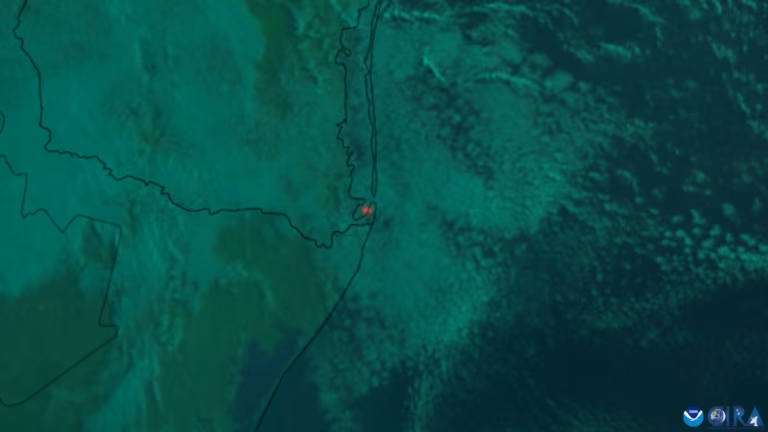
The damage on the ground was large. The pad had been built without a flame diverter or a water system to soften the blast. The engines’ fire dug a crater under the launch mount. The U.S. Fish and Wildlife Service estimated that debris spread across 385 acres, between SpaceX property and Boca Chica State Park. A fine dust traveled 6.5 miles (10.5 km), as far as the town of Port Isabel. Analyses by the University of Central Florida and Rice University found it was ordinary beach sand, with no health hazard.
The FAA reported no injuries. A fire burned about 3.5 acres of the park, south of the pad. On May 1, 2023, four environmental groups and one Native nation sued the FAA over the license, and a federal judge dismissed the case in September 2025.
The cause, according to the investigation
On September 8, 2023, SpaceX summed up the origin of the loss of control. During ascent, leaking propellant in the aft end of the Super Heavy booster started fires, which severed the connection to the primary flight computer. Without it, most of the booster’s engines lost communication and the vehicle lost control.
The same day, the FAA closed its mishap investigation. The final report cites multiple root causes and 63 corrective actions. The agency lists redesigns of the hardware to prevent leaks and fires, a sturdier pad and extra design reviews. It also calls for more testing of safety-critical systems, including the flight termination system, and tighter change control. It was a formal closure, not a green light. The FAA warned that launches would not resume right away at Boca Chica, because SpaceX still had to carry out the public-safety actions and obtain a license modification. The full report was never released; a redacted version came out in May 2025, at a Bloomberg journalist’s request.
What changed for flight 2
The most visible answer was on the ground. SpaceX installed a water-cooled steel plate under the launch mount, part of a deluge system. Installation began on July 5, 2023, finished on July 17, and the first full-pressure test came on July 28. The FAA approved the flight 2 license on November 15. The launch took place on November 18, seven months after the first, with Booster 9 and Ship 25. See Starship flight 2.
Quick glossary
- Raptor: SpaceX’s engine, which burns liquid methane and liquid oxygen. Super Heavy carries 33.
- Max q: the moment in ascent when air pressure on the rocket is highest.
- Thrust vector control: tilting the engines to steer the rocket.
- Flight termination system: a charge that ruptures the tanks and destroys the vehicle if it strays off course.
- OLP-1: the first orbital launch pad at Starbase.
- Block 1: the first design generation of the booster and the ship.
Common mix-ups
- “It blew up on its own”: the stack was destroyed on purpose by the flight termination system, after it lost control.
- “It was an orbital flight”: it never reached orbit. It stopped near 39 km.
- “It was supposed to land”: on this flight neither stage was to be recovered.
- “The dust was toxic”: two universities identified ordinary sand.
The rule to keep
Lifting off is not the same as flying well. On a first flight, what counts is the list that comes out of it. Here that meant 63 corrections demanded by the FAA and a rebuilt pad, the starting point for the next 14 flights.
Quick questions
When was Starship flight 1?
April 20, 2023. Liftoff came at 8:33 a.m. at Starbase.
How long did it last?
About 4 minutes. The plan was about 90.
Why did it fail?
Leaks and fires in the booster’s aft end cut off control of the engines, according to SpaceX.
What was the next flight?
Flight 2. It flew on November 18, 2023.
Next flight: Starship flight 2
Sources: Starship Flight Test, SpaceX, April 20, 2023; FAA Closes SpaceX Starship Mishap Investigation, FAA, September 8, 2023; Starship flight test 1, Wikipedia. Accessed on November 26, 2026. Eastern time calculated from UTC.
Featured image: Osunpokeh, CC BY-SA 4.0, via Wikimedia Commons. Text image: Steve Jurvetson, CC BY 2.0, via Wikimedia Commons.