Starship Flight 15: Ship Caught by the Tower, Booster Lost
Updated November 17, 2026.
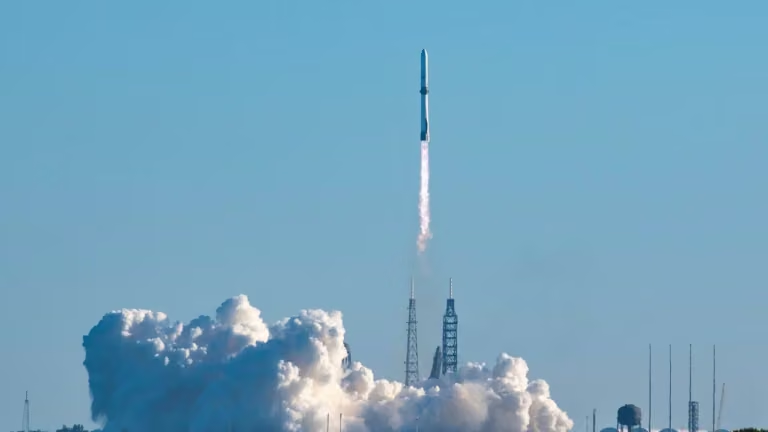
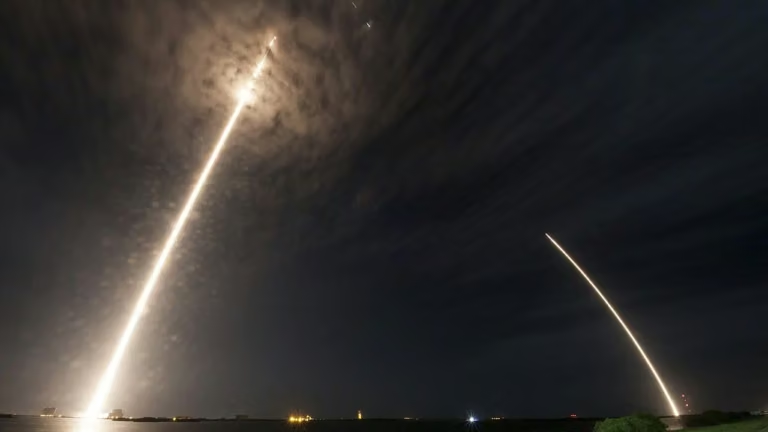
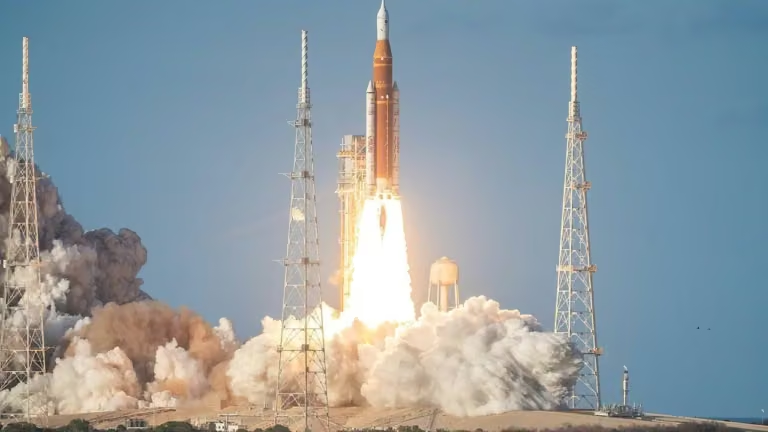
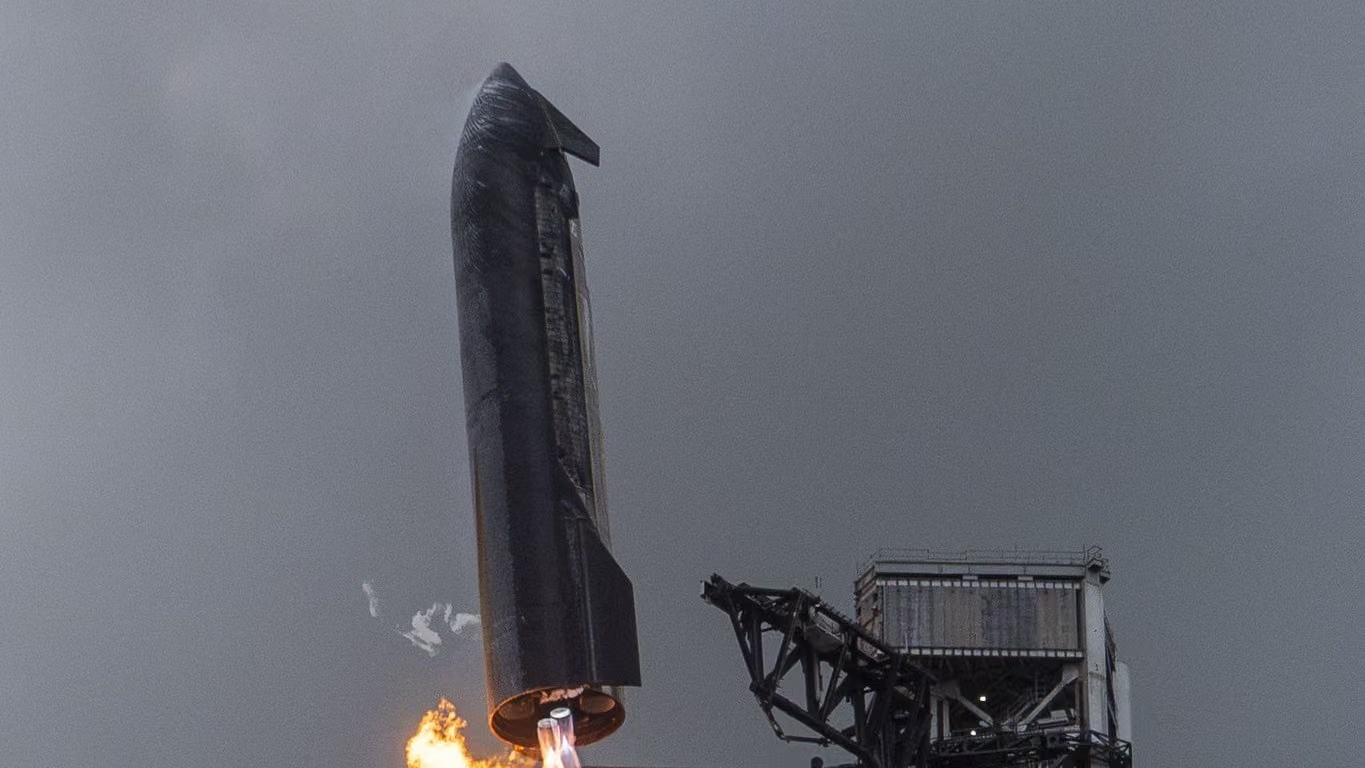
Starship’s 15th flight lifted off from Starbase, Texas, on Friday, November 13, 2026, at 4:47 p.m. Central time. The ship circled Earth about 14 times, left 26 Starlink V3 satellites in orbit and came back to its launch site 22 and a half hours later. On Saturday, the tower’s arms closed around it and caught it in midair, a first for a Starship. The Super Heavy booster had a different ending: it never returned to the tower and was destroyed over the Gulf of Mexico.
What happened, in order
SpaceX published an account of the flight on the mission page, and the facts below follow it. The UTC time, the vehicle names, the altitude and the orbit count come from English Wikipedia, which gathers the press coverage.
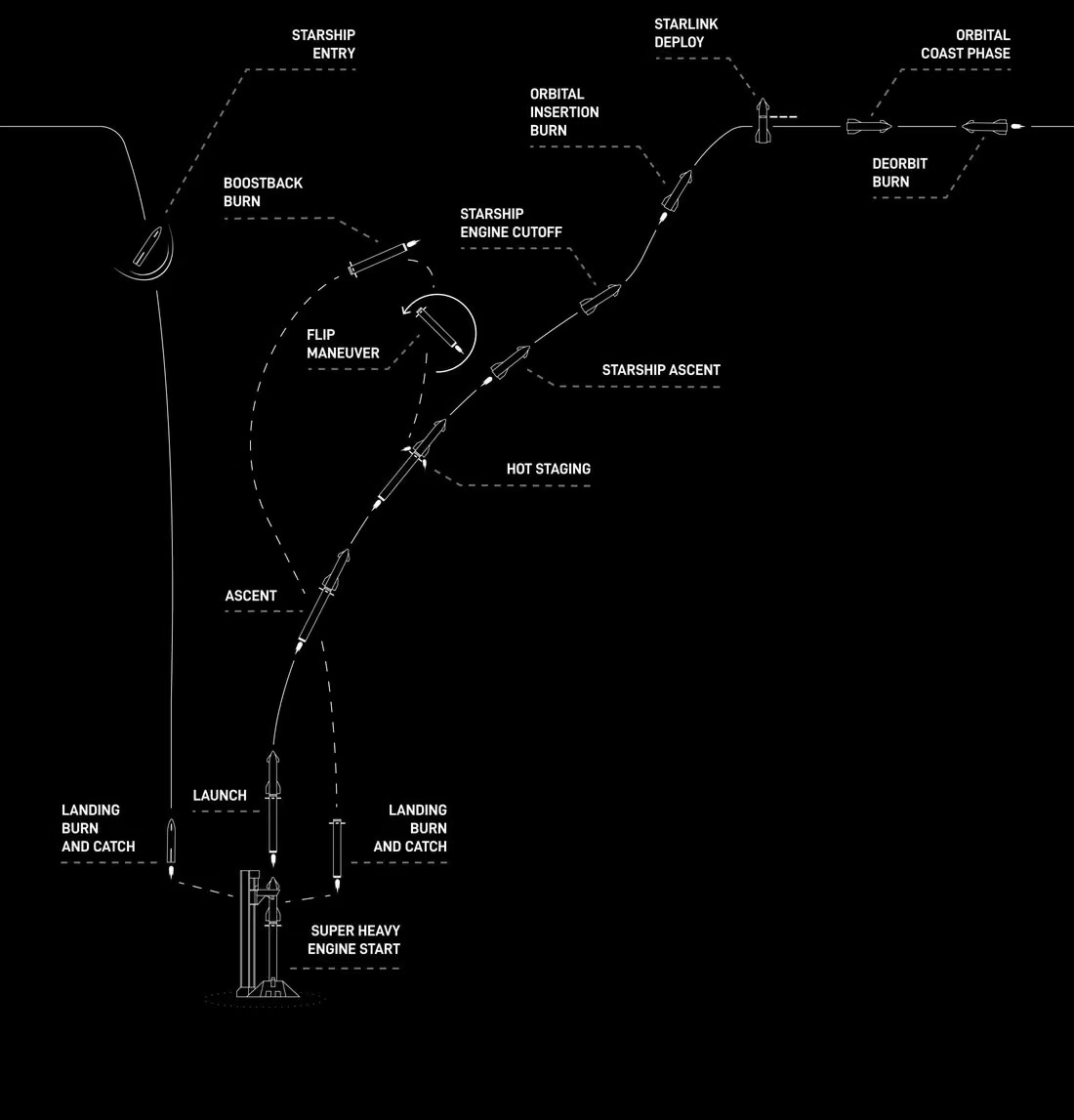
- Ascent: the booster, Booster 22, climbed on 33 Raptor engines. The ship, Ship 42, separated by hot-staging, lighting its own engines while still attached to the booster.
- Orbit: the ship finished its ascent burn and relit a single Raptor to enter orbit, about 171 miles (275 km) up.
- Satellites: once in orbit, it released the 26 Starlink V3 satellites. SpaceX says it made contact with every one and that they had started to raise their orbits toward the final position in the constellation.
- Waiting: the ship stayed in space for more than 20 hours while the team monitored its systems.
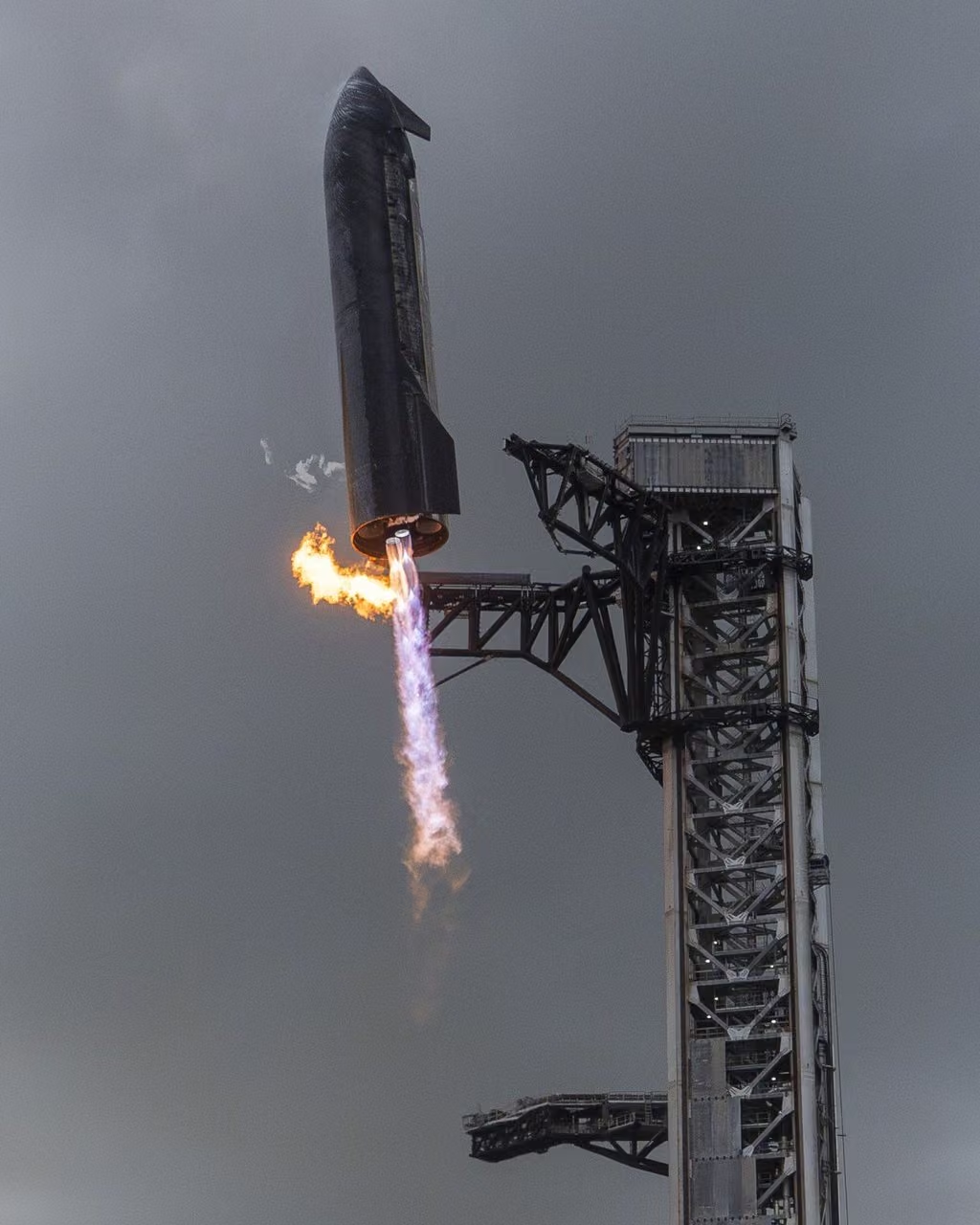
- Return: a deorbit burn took the ship out of orbit. It crossed the atmosphere, passed over the Gulf, reached the Texas coast and lit three Raptors to flip upright and slow down to the tower.
Goal by goal
SpaceX planned to catch both stages on the same flight, something never tried before. The result came out half and half.
| Goal | Result |
|---|---|
| Reach orbit | Done, at about 171 miles (275 km) |
| Release 26 Starlink V3 satellites | Done |
| Stay in space about 22 hours | Done: 22 h 32 min, according to Wikipedia |
| Catch the ship with the tower | Done |
| Catch the booster with the tower | No: diverted to sea and lost |
The booster: what is known and what is not
Booster 22 relit 32 of the 33 planned engines for its return burn, and the burn ended early because of low fuel mass, SpaceX says. The navigation system detected that the booster was not where it needed to be for a catch and triggered an automatic abort. It headed for a landing spot at sea, lit its engines for the descent and shut them down while hovering over the Gulf. At that moment, the flight termination system was triggered. The booster was lost.
The cause remains open. There were different versions. At first, SpaceX spokesperson Dan Huot pointed to a guidance problem. On Saturday he corrected himself: guidance did not keep the booster from returning, and the team was still looking into the origin. Elon Musk cited a slight loss of engine performance, according to CBS, which notes that the boosters from the three previous flights had been recovered.
The ship: the catch
SpaceX describes the return this way: Starship came in over the east coast of Texas, made a final curve over the Gulf and approached the same site it had left. It broke through the clouds, lit three Raptors for the landing flip and was held by the arms, which closed around it. It is the first catch of a Starship. It worked. Until now, Starship had only ended its flights in planned ocean splashdowns.
For this flight, the FAA had to expand the license for Flight 14, which covered only that launch. The approval came on the 13th and covered the ship’s return over populated areas, according to Wikipedia.
Approximate timeline
Times from SpaceX’s flight plan, counted from liftoff. Actual times vary by seconds.
| Time | Event |
|---|---|
| 2 min 19 s | Booster main burn ends |
| 2 min 21 s | Hot-staging separation |
| 26 min | Orbital insertion burn |
| 35 min | Satellite release begins |
| 1 h 18 min | Release complete |
| 21 h 36 min | Deorbit burn |
| 22 h 32 min | Catch at the tower |
What Flight 15 has not proved yet
Catching the ship opens the way to full reuse, but it leaves open items that CBS lists. SpaceX has to show, over many flights, the reliability needed to carry people. It also still needs automatic refueling in orbit, which the company plans to test on the next flights. Starship’s lunar lander, in the Artemis program, depends on tanker ships refueling it in orbit. NASA wants astronauts on the Moon in 2028 and says it is open to choosing Blue Origin’s lander if it is ready first.
The flight also did not solve booster recovery. With the ship caught and the booster lost, the math of full reuse is still open. SpaceX says the cause is still under investigation.
Common mix-ups about Flight 15
- “Starship landed”: it was caught by the tower’s arms, with no landing legs. It is the same method used before on boosters.
- “Both stages were recovered”: only the ship. The booster was lost over the Gulf.
- “The flight lasted 22 minutes”: it lasted about 22 and a half hours.
- “It was the first orbital flight”: the first was Flight 14, on September 28.
The rule to remember
Separate what SpaceX reports from what is still under investigation. The ship’s catch and the 26 satellites in orbit are in the official account. The cause of the booster’s loss is not, and any firm explanation today is a guess.
Quick questions
When was Starship Flight 15?
It lifted off on November 13, 2026, at 4:47 p.m. Central time, and the ship returned on November 14.
How many satellites did Starship carry?
26 Starlink V3, according to SpaceX.
Was Starship caught?
Yes. The arms of the Starbase tower held the ship, for the first time.
What happened to the booster?
It diverted to sea and was destroyed over the Gulf of Mexico.
Read also: Reusable rockets: how they work and who has landed one and The Artemis program.
Sources: Starship Flight 15, SpaceX; SpaceX pulls off dramatic midair catch, CBS News, November 14, 2026; Starship flight 15, Wikipedia; Space.com, coverage of the booster failure. Accessed November 17, 2026.
Featured image: SpaceX, CC BY 4.0, via Wikimedia Commons.