Starship flight 3: the ship reaches orbital speed and is lost on reentry
Updated on November 26, 2026.
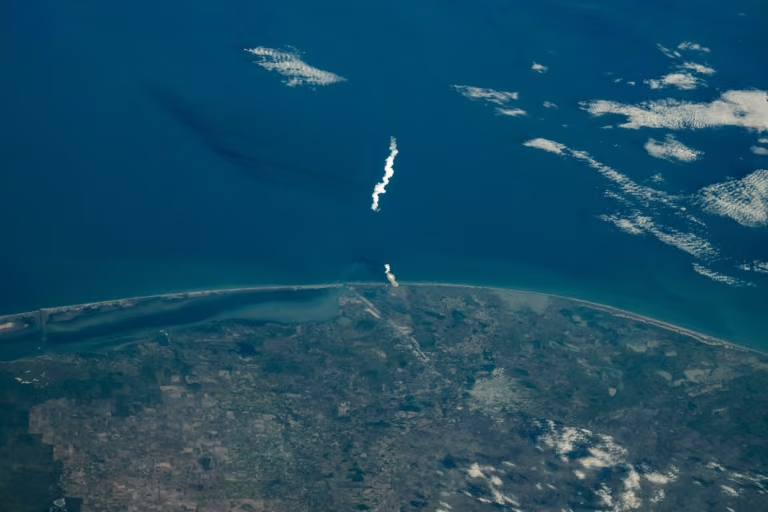
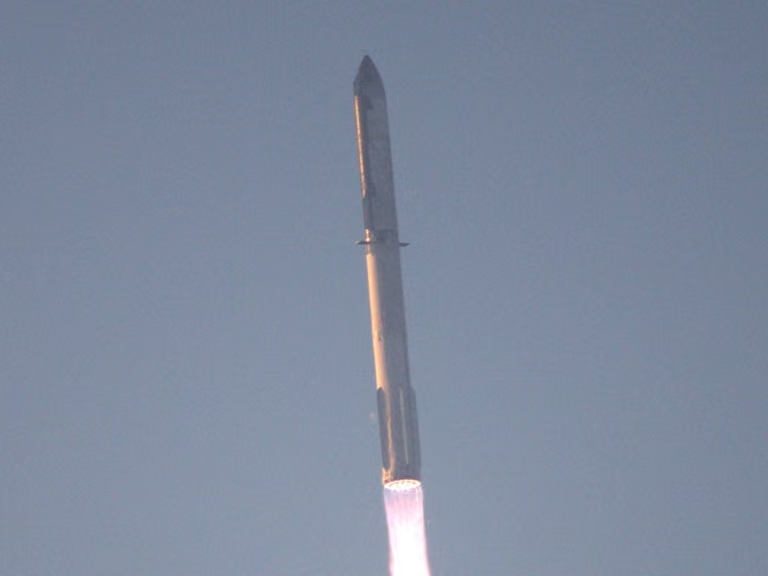
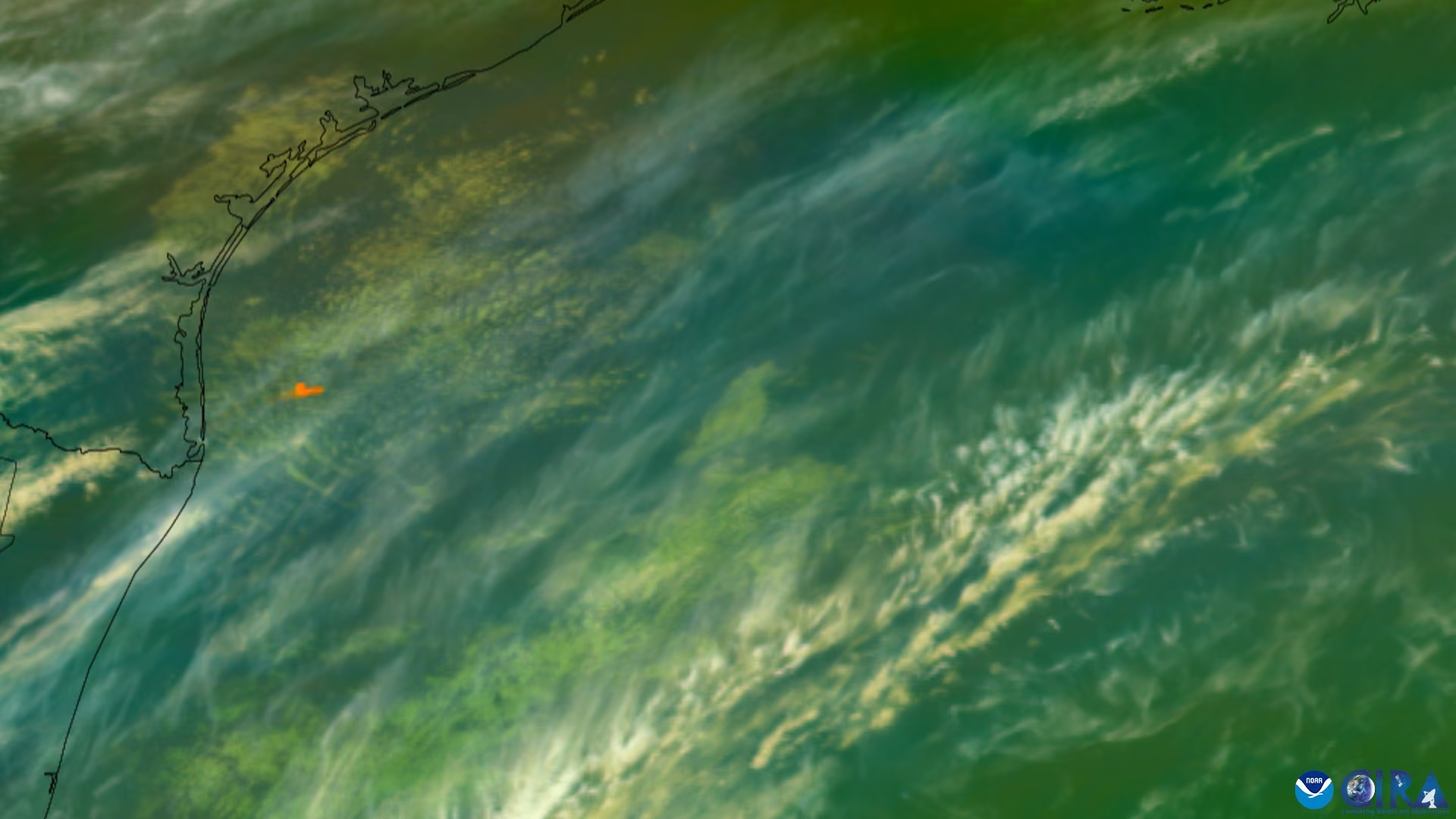
Starship flight 3 lifted off from Starbase, Texas, on Thursday, March 14, 2024, at 8:25 a.m. local time (9:25 a.m. Eastern). It was the first flight in which the ship completed its ascent burn and reached its planned speed. In orbit it opened the payload door and ran a propellant transfer demonstration. Then, on the first reentry from space, it lost control and was destroyed. The booster was lost too, about 460 meters above the sea. It was the longest flight so far. It lasted 49 minutes.
Flight 3 at a glance
| Item | Detail |
|---|---|
| Date and time | March 14, 2024, 13:25 UTC (8:25 a.m. CDT at Starbase) |
| Site | Starbase, Texas, orbital launch pad OLP-1 |
| Booster | Super Heavy Booster 10 (B10), Block 1 |
| Ship | Starship Ship 28 (S28), Block 1 |
| Payload | None |
| Ship trajectory | Suborbital, with an apogee of about 234 km (145 mi) |
| Duration | About 49 minutes (the plan was a little over 1 hour) |
| Result | Both vehicles lost, with most milestones met |
What the test was meant to show
The script was longer than on earlier flights. The ship was to fly most of a lap around Earth and open and close its payload door. It would run a propellant transfer demonstration, relight one Raptor in space and reenter over the Indian Ocean. The booster would try, for the first time, a landing burn in the Gulf of Mexico, the maneuver that would later lead to catches at the tower.
Since flight 2, SpaceX had made 17 changes to the vehicles. Among them were electric control of the ship’s engines and dumping liquid oxygen only after the engines shut down. The FAA closed the flight 2 investigation on February 26, and the flight 3 license came on March 13.
What happened, in order
- Ascent: for the second time, all 33 Raptor engines completed the ascent burn. Hot staging worked again, with the ship lighting its six engines.
- Booster, boostback burn: six engines shut down on their own, and the burn ended early. The booster ended up off its planned path.
- Booster, landing burn: only two engines relit. The vehicle was lost at about 462 m, nearly 7 minutes after liftoff.
- Ship, full burn: the six engines took the ship to its planned speed, a first for the program.
- In orbit: the payload door opened and closed, and the propellant transfer demonstration began. The in-space engine relight was called off, because the ship was rolling more than allowed.
- Reentry: it was the first Starship entry from space. Live views came through Starlink terminals mounted on the ship. The last telemetry arrived at about 49 minutes, at roughly 65 km. About 15 minutes were left before the planned splashdown.
Objective by objective
| Objective | Result |
|---|---|
| Ascent and hot staging | Done, for the second time |
| Full burn of the ship’s engines | Done, for the first time |
| Payload door and propellant transfer | Done, according to SpaceX |
| Relight a Raptor in space | No: called off because of the ship’s roll |
| Booster landing burn | Partial: two engines lit |
| Reentry and ocean splashdown | No: lost at about 65 km |
The cause, according to the investigation
The FAA declared a mishap on March 14, and SpaceX led the investigation under the agency’s oversight. On May 24, the company published what it found and the changes it adopted, in an account that Wikipedia summarizes in detail.
There were two separate problems. On the booster, the most likely cause was an old acquaintance: clogged filters in the liquid-oxygen supply to the engines, which dropped the pressure at the turbopumps. It had shown up on flight 2. SpaceX changed the filtering inside the oxygen tank.
On the ship, valves in the roll control thrusters became clogged minutes after engine cutoff, and the ship began to roll without being able to relight its Raptor. It entered the atmosphere off its planned attitude. The roll greatly increased the heat load, on both tiled and untiled areas. SpaceX added roll control thrusters for redundancy and improved the Raptor startup hardware and software.
What changed for flight 4
SpaceX asked the FAA to agree that the accident did not put the public at risk, which would allow a return to flight with the investigation still open. The FAA said on May 17 that this route was possible. The next launch, flight 4, took place on June 6, 2024, with Booster 11 and Ship 29. See Starship flight 4.
Quick glossary
- Landing burn: lighting the engines near the end of the descent to slow the booster.
- Orbital speed: the speed needed to stay in orbit; on this flight the trajectory was still suborbital.
- Roll control thrusters: small jets that turn and steady the ship in space.
- Propellant transfer: moving propellant from one tank to another, tied to the goal of refueling ships in orbit.
- Telemetry: data the vehicle sends to the ground during flight.
- Starlink on the ship: internet terminals that sent the reentry video.
Common mix-ups
- “The ship reached orbit”: it reached its planned speed, but on a suborbital path meant to end in the ocean.
- “The payload door failed”: SpaceX says the test succeeded, and the doubt came from footage of the flight.
- “The booster landed”: no. Only two engines lit in the landing burn and the vehicle was lost near the sea.
- “The reentry was complete”: it ended at about 65 km, before any splashdown.
The rule to keep
Moving from one milestone to the next shows where the project jams. On this flight, the ship went farther than ever and jammed on its roll. The booster’s oxygen filters jammed for the second time. No vehicle came back.
Quick questions
When was Starship flight 3?
March 14, 2024, at 8:25 a.m. at Starbase.
Did the ship complete reentry?
No. The last telemetry came at about 65 km.
What did Starship test in space?
The payload door and a propellant transfer.
When was flight 4?
June 6, 2024.
Previous flight: Starship flight 2
Sources: Starship’s Third Flight Test, SpaceX, March 14, 2024; Starship flight test 3, Wikipedia, which summarizes SpaceX’s May 24, 2024 account and FAA statements. Accessed on November 26, 2026. Eastern time calculated from UTC.
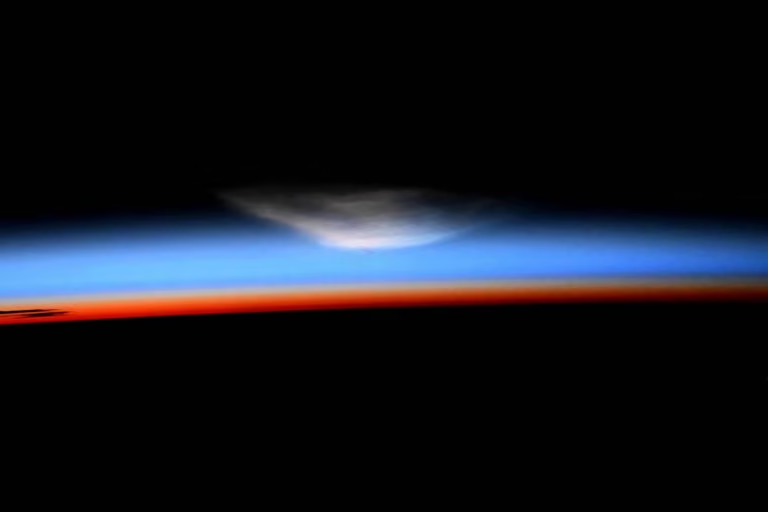
Featured image: NOAA/CIRA, public domain, via Wikimedia Commons. Text image: Jenny Haut, CC BY-SA 4.0, via Wikimedia Commons.